

When Blakely announced they’d become Norwich City’s new front-of-shirt sponsor in June 2024, founder Gareth Newman said something that immediately raised eyebrows: they’d paid “over the average going price for sponsorship in the Championship.”
Most sponsors try to downplay what they’ve spent. Newman went the opposite direction – publicly confirming his company paid premium rates to put their name on the Canaries’ kit. For a fashion brand built in a bedroom in Norfolk, that was a bold statement. Nine months later, with March 2026 here, we can finally look at what happened next.
Not everything is public. Revenue figures, sales data from the dual-branded collections, exact contract values – none of that gets disclosed. But enough pieces are on record to ask whether Blakely’s bet on Championship football actually paid off.
Special thanks to Unlimluck for contributing consumer spending research on football fan behavior that provided context for this analysis.
The Deal Nobody Expected
Championship shirt sponsorships typically run between £330,000 and £500,000 per year for mid-table clubs. That’s the baseline. Blakely confirmed they went above it, secured at minimum three seasons, and landed the deal through direct negotiations with Norwich’s commercial team after what the club described as “an extensive search.”
What made this unusual wasn’t just the price. It was the category. Betting companies hold 25% of Championship shirt deals (6 out of 24 clubs in 2025/26). Finance and telecom firms dominate the rest. Fashion brands? Nearly non-existent. Blakely became the only fashion label operating as a main shirt sponsor in England’s top two divisions. The only comparable case is League One’s Birmingham City, sponsored by US streetwear brand Undefeated.
Norwich had extra pressure on this decision. In 2021, they’d signed a £5 million deal with BK8, a gambling platform, then cancelled it three days later after fan backlash. The club couldn’t afford another sponsorship controversy. Choosing a local Norfolk brand with clean optics and community roots made sense politically, but it still had to make sense commercially.
By July 2025, Blakely extended the partnership to become front-of-shirt sponsor for Norwich City Women. That’s 13 months after the men’s deal. You don’t expand a sponsorship that’s underperforming.
The Business Behind the Brand
Blakely wasn’t some speculative startup when this deal happened. The company had been building for over a decade, and the trajectory was steep.
In 2019, COO Andy Gale confirmed they’d done £8 million in revenue. By the time the Norwich deal was announced, they’d hit over £37 million in sales in their last reported 12-month period – roughly a 4.6x increase in five years. The COO also stated they were targeting £65 million in their next financial year, which would represent an 8x growth from 2019 to target.
Whether they hit that £65 million isn’t public yet. What is confirmed:
- 115% growth over two years
- 70 staff
- 42,000 sq ft warehouse in Melton Constable, Norfolk
- 300,000+ Instagram followers
- Named by The Sunday Times among the UK’s fastest-growing companies (one of fewer than 30 non-London companies in the top 100)
- Norfolk Business of the Year 2025
The brand had momentum before Norwich. The question was whether a Championship sponsorship could accelerate it further or just burn cash on exposure that doesn’t convert.
Worth Notice:
Fashion brand Blakely appoints MatchFit after landmark Norwich City football partnership
September 10, 2024
What 26,000 Fans Per Match Actually Means
Carrow Road holds 27,359. Norwich City’s average attendance for the 2024/25 season sat around 26,381 – a 96.9% capacity fill rate. Through mid-season, 368,556 fans had walked through those gates.
Every one of them saw Blakely’s name on the shirt. Every broadcast carried it. Every social media post from the club featured it. That’s the exposure argument sponsors make, and it’s not wrong – but it’s also not the full picture.
Here’s what matters more: did those fans actually buy anything?
Blakely launched a dual-branded clothing range with Norwich in 2024. It sold well enough that they released Dual Branded 2.0 in August 2025. To shoot the second collection, Blakely flew to the Netherlands and Belgium with the Norwich squad during preseason, working directly with players to capture the range in real settings. That level of investment suggests the first collection wasn’t a flop.
But we don’t have sales numbers. Blakely hasn’t published them. Norwich hasn’t either. So we’re left inferring success from the fact that a sequel exists at all.
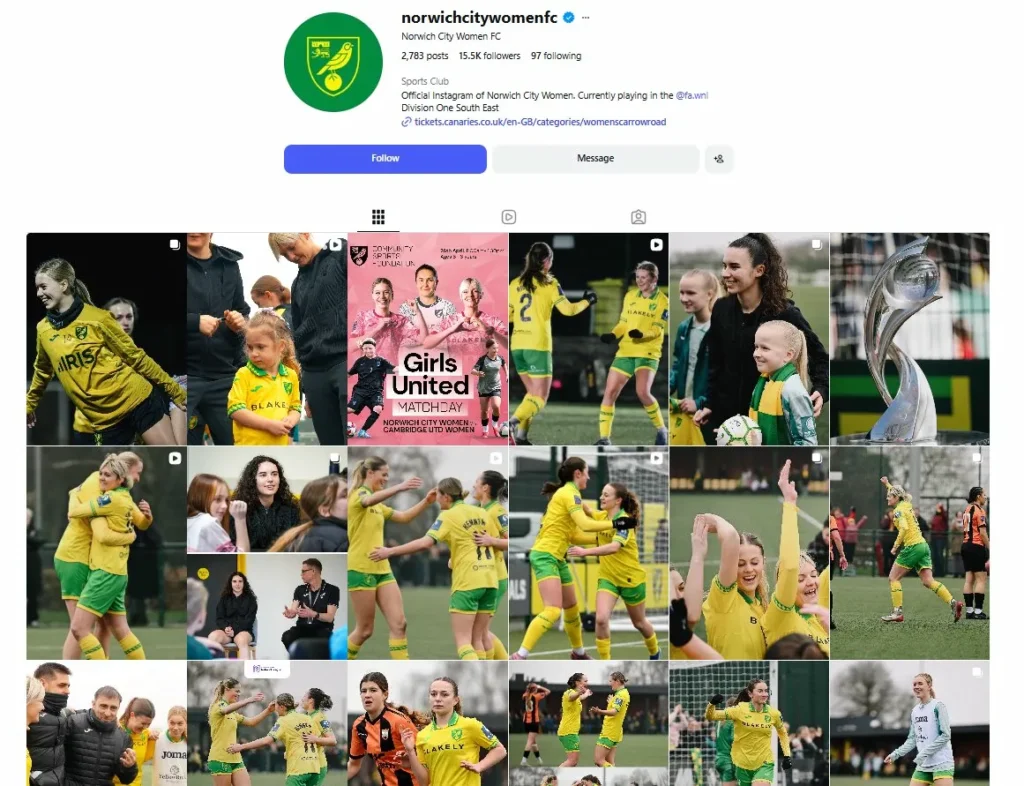
As Posted by @norwichcitywomenfc: Norwich City Women are pleased to announce that club principal partner @blakely will feature on the front of our 2025/26 shirts:
The Consumer Spending Reality (And Why It’s Getting Harder)
Football fans are cutting back. 42% of UK supporters reported reducing merchandise spending due to financial pressures, according to recent consumer research. Matchday food and drink alone now costs an average of £20 per visit. Premier League replica shirts run between £58 and £85 across the 20 clubs, compared to around £30 when the league launched in 1992.
Championship prices aren’t quite as brutal, but the trend is the same – everything costs more, and fans have less discretionary budget to work with.
This is where the broader football fan spending picture gets interesting. Betting behavior data shows that many fans allocate a portion of their entertainment budget to platforms like <a href=”https://unlimluck.org.uk/”>Unlimluck</a> on matchdays, treating small stakes as part of the experience rather than separating it from ticket and merchandise costs. When you’re already spending £50+ on tickets, £20 on food, and potentially £10-20 on a bet, adding a £40 branded T-shirt or £80 hoodie becomes a tougher sell.
The global football merchandise market was valued at $14.7 billion in 2024 and is projected to hit $27.9 billion by 2034, growing at 6.8% annually. The apparel segment holds a 38.1% share. So the market is expanding, but individual fan budgets are tightening. That creates a gap between macro growth and micro spending decisions.
For Blakely, this means competing not just against other clothing brands, but against every other way a football fan spends their money on matchday. The dual-branded collection had to be compelling enough to win that budget battle, and the fact that a second collection launched suggests it did – at least enough to justify continued investment.
What We Actually Don’t Know (And Why That Matters)
Transparency has limits. Here’s what remains private:
| Missing Data | Why It Matters |
|---|---|
| Exact financial value of Blakely-Norwich deal | Would confirm what “above average” actually means in pound terms |
| Blakely sales growth directly after Norwich announcement | Would prove ROI of sponsorship investment |
| Dual-branded collection sales figures | Would show whether fan exposure converted to purchases |
| Blakely’s confirmed 2025 revenue vs £65m target | Would indicate if sponsorship era accelerated or slowed growth |
| Website traffic increase post-sponsorship | Would demonstrate digital brand lift from football exposure |
None of this is unusual. Most brands don’t publish granular sponsorship ROI data. But it does mean any analysis of “did this work?” has to rely on indirect signals rather than hard proof.
What the Signals Suggest
Blakely renewed the deal into a second season. They expanded it to Norwich City Women. They launched a second dual-branded collection. They continue investing in the partnership with player collaboration shoots and campaign production.
Those aren’t the actions of a company regretting an expensive sponsorship. They’re the actions of a brand that’s seen enough positive returns – whether in sales, awareness, or strategic positioning – to double down.
The growth trajectory before Norwich was already strong (£8m to £37m in five years). If the sponsorship had cratered that momentum or failed to deliver, the logical move would be to quietly let it expire after the minimum three seasons and redirect budget elsewhere. Instead, they leaned in.
Compare this to Norwich’s previous controversy with BK8. That deal collapsed in three days because the downside outweighed the upside immediately. Blakely’s partnership is approaching two years with expansion, not contraction.
The Bigger Context: Fashion Brands and Football
Premier League shirt sponsorships are worth a combined £408 million across all 20 clubs in 2025/26. Championship commercial revenues sit around $9.5 million per year per club on average – a fraction of top-flight budgets. For a fashion brand like Blakely, that gap might actually be an advantage.
Sponsoring a Premier League club would cost exponentially more and place you alongside giants like Emirates, Etihad, and Standard Chartered. At Championship level, Blakely became the standout – the only fashion brand in a field of betting companies and finance firms. That differentiation carries value beyond raw exposure numbers.
The EFL (covering Championship, League One, and League Two) generates £1.93 billion in combined supporter spending and supports over 12,000 full-time jobs, with 88% of that spend staying local. For a Norfolk-based brand sponsoring a Norfolk club, that local economic connection reinforces brand identity in ways a distant Premier League deal might not.
The Timeline Test
June 2024: Deal announced
August 2024: First dual-branded collection launches
2024/25 season: 96.9% capacity crowds, 368,556+ fans through gates
July 2025: Extended to Norwich City Women
August 2025: Dual Branded 2.0 launches
March 2026: Partnership continues with no public indication of issues
That’s 21 months of sustained activity. If the sponsorship were failing, something would have leaked by now – a quiet non-renewal, a pivot in messaging, a scaling back of dual-branded releases. Instead, the investment keeps increasing.
What “Above Average” Actually Bought
We can’t calculate exact ROI without sales data. But we can assess what Blakely objectively received:
Guaranteed exposure:
- 26,381 average attendance per home match
- Broadcast coverage across Championship fixtures
- Social media visibility through official club channels
Brand positioning:
- Only fashion brand as main sponsor in England’s top two divisions
- Association with a historic club in their home region
- Differentiation from betting and finance-dominated sponsorship landscape
Consumer access:
- Direct route to football fans already in spending mode
- Dual-branded collections creating new product categories
- Women’s team sponsorship opening additional demographic
Strategic credibility:
- Partnership with established Championship club validates brand scale
- Three-season commitment signals long-term thinking
- Women’s team extension demonstrates values alignment
Whether that justified paying “above average” depends on Blakely’s internal metrics, which aren’t public. But the fact that they keep expanding the partnership suggests those metrics are hitting targets.
The Question That Remains
Did Blakely overpay?
Without the exact contract value or post-deal revenue figures, that’s impossible to answer definitively. What’s clear is that they committed to premium pricing deliberately, renewed the deal, expanded it to the women’s team, and continue investing in dual-branded product development.
For a brand that went from £8 million in revenue in 2019 to over £37 million by 2024, with a publicly stated target of £65 million, paying above-average rates for a Championship sponsorship could be justified if it accelerated growth toward that target or positioned the brand for international expansion.
The global football merchandise market is growing at 6.8% annually. The apparel segment holds 38.1% of that market. Blakely now has a foothold in that space through an official club partnership, which opens doors beyond just Norwich fans – anyone interested in football-fashion crossover products becomes a potential customer.
That’s worth more than stadium attendance numbers alone. It’s access to a growing global market where football and fashion increasingly overlap, and where authenticity (local brand, genuine club connection) matters more than ever.
The 9-Month Verdict
Nine months isn’t enough time to judge a multi-season sponsorship definitively, but it’s enough to spot red flags. Blakely’s partnership with Norwich City has no visible red flags. It has expansion, product development, and continued investment.
The gaps in public data mean we can’t prove ROI numerically, but the pattern of behavior – renewal, extension, second collection – suggests the partnership is working well enough to justify ongoing commitment.
Whether Blakely hit their £65 million revenue target remains to be seen. Whether the Norwich sponsorship directly contributed to that growth is unknowable from outside the company. But for a fashion brand that started in a bedroom in Norfolk and now competes in a global market worth billions, putting their name on Norwich City’s shirt was a bet on brand positioning, not just exposure.
Based on what’s happened since June 2024, it looks like that bet is paying off.
Time will tell if it was worth paying above average. For now, Blakely seems to think it was.


