

Quick Tip: That £200 Japanese knife going dull in your drawer? A £35 Victorinox Fibrox stays sharper with basic maintenance. Professional chefs use cheap knives they maintain weekly, not expensive blades they baby.
You know that £200 Global knife sitting in your drawer? The one that can’t slice a tomato anymore? You’re not alone. Walk through any UK farmers market on a Saturday and you’ll spot the knife sharpening van with a queue of people clutching their expensive, dull blades. The bloke running it charges £7.50 per knife and probably clears £500 that morning.
The maths is mental. People drop hundreds on Japanese steel they can’t pronounce, then let it go blunt because they don’t know basic maintenance exists. Meanwhile, professional chefs are using £35 Victorinox knives that they sharpen weekly and replace every few years without thinking twice.
The Mobile Sharpening Gold Rush
Those knife sharpening vans aren’t charity work. Precision Sharpening charges £7.50 per knife, while London services have a minimum of £79 for domestic customers covering up to 8 knives. The farmers market guys are making proper money – three knives every ten minutes at £7.50 each works out to £135 an hour. Even accounting for setup time and travel, that’s serious cash.
Check Winchester’s Cobbs Farm Shop any Monday morning. Becky runs her knife sharpening service there from 10am to 2pm. Four hours, probably 40-50 knives at £7-10 each. Do that at three locations weekly and you’re looking at £30,000 a year, part-time.
The postal services are even smarter. Knife Sharp sends you a special shipping box, you post your knives, they sharpen and return them. No van, no petrol, no standing in the cold. Just a workshop and steady orders coming through the website.
Japanese Water Stones: The Biggest Con Going
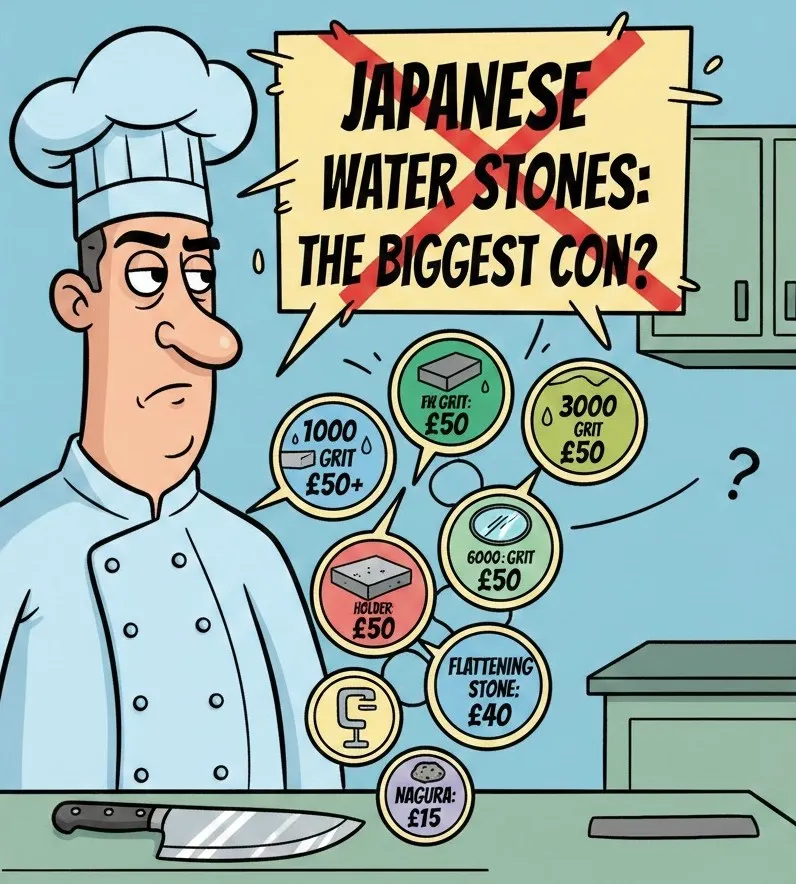
Every knife enthusiast bangs on about Japanese water stones. Here’s the real cost breakdown:
- 1000 grit stone for basic sharpening – £50 minimum for decent quality.
- 3000 grit for refining the edge – another £50.
- 6000 grit for that mirror finish – £50 more if you’re committed.
- Flattening stone because water stones wear unevenly – £40.
- Stone holder to keep everything stable – £25.
- Nagura stone for creating slurry – £15.
You’re pushing £230 before you’ve touched a blade. Then you need hours of practice to use them properly. Wrong angle? You’ve ruined your knife’s geometry. Too much pressure? You’ve created a hollow. Not enough water? The stone glazes over. Most people use them twice, mess up their knives, then pay someone £15 to fix the damage.
Professional sharpeners use belt sanders and grinding wheels. They fix your knife in 90 seconds flat. You could spend three hours with your water stones and not match their results. That Nichirin blade from Demon Slayer that never needs sharpening? Pure fantasy. Even the Mac, which tested as one of the sharpest knives, needed regular honing to maintain its edge.
Why Victorinox Beats Your Expensive Japanese Steel
In every commercial kitchen from the fanciest to the most humble, there’s always a Fibrox 8 inch chef’s knife. The Victorinox Swiss Army Fibrox Pro 8″ Chef’s Knife has been routinely tested and recommended for nearly three decades. Why? Because it costs £35-45 and does everything you need.
The steel’s softer than Japanese knives, which sounds bad until you realise soft steel is easier to sharpen. Three swipes on a £10 honing steel before each use, proper sharpening twice a year. That’s it. No special stones, no sending it to Japan for maintenance, no crying when you chip it on a chicken bone.
The Victorinox was impressively sharp, able to smoothly cut a tomato even after edge-dulling routines. It’s not winning any beauty contests with that black plastic handle, but it stays grippy when wet, goes in the dishwasher if you’re lazy, and costs less than getting five knives sharpened professionally.
The Nichirin Blade Fantasy vs Kitchen Reality
The Nichirin Blade that stays sharp forever? Even Damascus steel needs maintenance. Even powder metallurgy steels go dull. The hardest Japanese steel at 65 HRC still needs sharpening – it just chips instead of bending when it fails.
Restaurant kitchens prove this daily. They don’t use £300 knives. They use cheap, sharp knives they can maintain quickly. A line cook with a £40 Victorinox will outperform a home cook with a £400 Shun every single time. Not because the Victorinox is better steel – it objectively isn’t – but because the line cook keeps it sharp.
The Global G-2 everyone raves about? The biggest issue was its grip in wet situations – it became very slippery when working with wet food. That beautiful all-metal handle that looks so professional becomes a liability when you’re actually cooking. Meanwhile, ugly plastic Fibrox handles stay secure no matter what.
Blind Test Results Nobody Talks About
- ProCook’s £45 Damascus knife looks incredible. Wavy patterns, wooden handle, comes in a presentation box. In blind cutting tests, it performs worse than a £12 Kiwi knife from the Asian supermarket. The Kiwi’s thin, takes a wicked edge, and Thai street food vendors use them twelve hours a day.
- Zwilling Professional S knives cost £80-120. German engineering, ice-hardened, all the marketing speak. The German-made Zwilling performed as a fantastic blade, sharp and well made, but here’s the thing – it doesn’t cut £70 better than a Victorinox. You’re paying for the name and the bolster that actually makes sharpening harder.
Those ceramic knives everyone bought five years ago? They’re sharp for ages, true. Then they chip or snap because ceramic is brittle. No fixing that. A £60 ceramic knife becomes landfill while a £10 carbon steel knife from the charity shop could last another generation with basic care.
The Real Economics of Sharp Knives
Here’s what actually makes financial sense:
- Buy three Victorinox knives: 8-inch chef’s (£40), paring (£8), bread (£25). Total: £73.
- Get a £10 honing steel from Robert Dyas.
- Learn to hone before each use – takes 10 seconds.
- Professional sharpening twice yearly – £15 each time.
- Total yearly cost after initial purchase: £30.
Compare that to the Japanese knife route:
- One Japanese gyuto: £200.
- Water stones you’ll use wrong: £50 minimum.
- Professional sharpening every three months because you’re scared to touch it: £60 yearly.
- Replacement when you chip it on a bone: Another £200.
The farmers market sharpening guy told me his best customers own the most expensive knives. They’re paying him £30 every few months to maintain blades that cost ten times what professionals use. His own knives? Old Sabatiers from car boot sales. Sharpens them himself on a £40 belt sander from Screwfix.
Skip the Subscription Scams
Knife sharpening subscriptions have recently come into vogue, with companies advertising their “unlimited sharpening” services for just £20 a month. It sounds convenient to have your knifes swapped out for new ones as yours are sent for sharpening. Then you realize you’re paying £240 a year for a service which you only have to use a couple times a yeat. It’s not so useful after all.
Instead, just buy a pull-through sharpener. £15 will have your knives working for you for a number of years. When your knives need a pull-through, you can get them sharpened in the case where you take them to the farmers market. It is way better to spend 30 a year than 240, which is what the sharpening subscriptions will market too you.
The honest truth is knife skills are much more important than the knife you have. A ten dollar knife is much more effective if its sharp then a dull, 200 dollar knife. A good cook will be able to do much more with their knife, in comparison to a not good cook with the expensive ones. It’s best to just keep the knives you have and make sure that they are sharp.
Imagine you’re at a farmer’s market. You see someone at the market with a big knife roll in line. What do you think? You might think they’re a chef. They probably are a chef. Most chefs are really good at cooking and really good at spending money. Most chefs probably spent a ton of money on the precious knives they’re toting around. However, it’s good to remember that every one of these knives gets dull.
And chefs spend even more money to keep their knives shiny and keep them precious. Keeping a knife shiny and dulling the blade, then replacing it with a brand new one every time you use it is a huge cocking waste.
Everyone’s always pretending to be respectful and the pretend respectful thing to do is spend a ton of money on knives at markets and pretend they’re precious and really good to use. These knives are not good to use is often really expensive and often gets wasted on expensive brittle metal. Smart money is the opposite of that. You want to spend small money on knives that you can use. then you have the precious knife. You use that knife to do with a blade what knives are good for. do you think the blade is good? it’s a shame to say sharp, dull, shiny, You want it to be blunt. it’s a shame to say that you think the knife is good, expensive to be a cock to the blade, always pretending to be tapering exactly. cock money with a sham.
Knives are a fantasy. All blades get dull, focus on the good blades. when it gets dark and to be a cock of the blade, ego money. The good knives you fake are the good ones.


