

Key Takeaways
- That “hand-forged by Japanese masters” katana at the convention? Factory-made in China or Pakistan for £30–£80. The dealer’s paying less than you spend on a decent meal out.
- £500–£3,000 for a wall ornament with a good story attached. The markup isn’t covering craftsmanship – it’s covering the sales pitch.
- Real Japanese katanas – tamahagane steel, proper certification, actual traditional methods – don’t exist under £10,000. If someone’s selling “authentic” for less, they’re not.
- Curved blades over 50cm have been a legal headache in the UK since 2008. Shipments get seized, money vanishes, and you’re left explaining yourself to customs.
- Nobody mentions the running costs. Insurance alone hits £200+ yearly. Then there’s storage, professional polishing (£200–£500 when needed), constant rust prevention. Your “investment” keeps charging rent.
- Training seriously? Bokken run £15–£30. Foam swords £20–£40. Quality iaito £200–£800. UK-made legal swords around £400. All actually functional. All won’t land you in trouble or leave you £3,000 lighter for something that just sits there.
Quick Tip: That luminary “hand forged katana” you are considering for two grand? Likely, it’s mass produced in China. UK martial artists train using foam swords that cost around £50, meanwhile, there are enthusiasts who spend thousands on display swords that they are, legally, unable to carry.
Swords vendors will be one of the first things you notice walking into most UK martial arts conventions: glossy, “hand forged” katana swords for £500-£3000, and without fail, the gentleman behind the desk professes how his katana are “traditionally” tsukuridashi, and might even drop a respectful “sensei” or “ dojo” to assure the crowd that he is the authority on martial arts. All the while, martial artists in the know train for a £25 foam sword from “Fight Outlet.”
The reality is that most of these vendors are from Longquan, China, or are from mass produced workshops in Pakistan. Thousands of the same blades are pumped out of these factories monthly. The same vendors for the UK market sew in a different name. The Parliamentary Association for the Preservation and Promotion of Japanese Swords has stated that “many of the katana being sold in bulk around the world are Chinese made. They lack the original craftsmanship and are forgeries of the Japanese sword.”
The Mass Production Reality Nobody Discusses
Chinese manufacturers openly advertise their katana production on sites like Made-in-China.com. Zhejiang Zhengs Sword Co., Longquan Huatai Sword Co., and dozens of other factories pump out “replica Japanese samurai katanas” by the container load. These aren’t artisan workshops – they’re industrial operations with production lines and wholesale pricing.
The process goes like this:
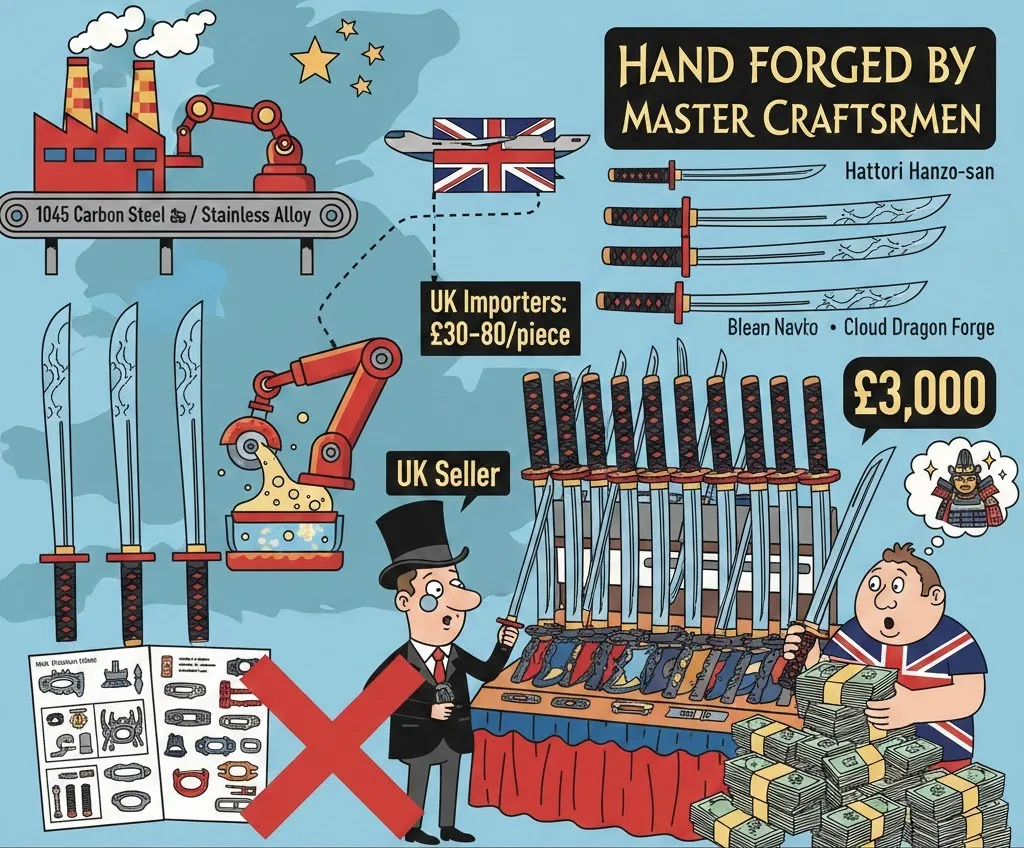
- Chinese factories produce blanks using 1045 carbon steel or cheaper stainless steel alloys.
- Basic machine grinding creates the blade profile and fake hamon (temper line) gets acid-etched.
- Fittings come from catalogues – same dragon tsuba on fifty different “unique” swords.
- UK importers buy them for £30-80 per piece wholesale.
- Same sword appears at conventions for £500-1500 as “hand forged by master craftsmen.”
- Sellers make up Japanese-sounding names and backstories for marketing.
Pakistan operates similarly, though their swords tend toward the medieval fantasy market. Cheap stainless steel, threaded tang construction that’ll snap if you swing it wrong, brass fittings that turn green within months. These wholesale for even less – sometimes £15-20 per sword.
Real Japanese swordsmiths undergo five to seven years of apprenticeship. They produce maybe 12-15 swords yearly. A genuine NBTHK-certified katana starts at £10,000 minimum. Anything under that claiming to be “authentic Japanese” is lying.
UK Legal Nightmare Most Collectors Ignore
Since 2008, it’s illegal to sell, import, or possess curved blades over 50cm unless they meet specific exemptions. The government guidance states swords with curved blades of 50cm or more may only be imported for historical re-enactments or martial arts demonstrations with public liability insurance.
The exemptions are narrow:
- Made before 1954 (good luck proving that on your Chinese replica).
- Made by traditional methods (requires actual documentation, not seller promises).
- For religious ceremonies or martial arts with insurance proof.
- Part of museum collections or historical displays.
That £2,000 “battle ready” katana you bought? If it doesn’t meet these criteria, you’re technically breaking the law just having it at home. Police can confiscate it, and you could face prosecution. Border Force regularly seizes imports – they know what real traditional forging looks like versus mass production.
Even legal swords come with restrictions. You cannot carry them in public unless travelling directly to a legitimate venue (dojo, museum, re-enactment) with the blade fully covered. One stop at Tesco on the way home from martial arts class? That’s illegal carry.
The Hidden Costs That Drain Wallets
Beyond the inflated purchase price, sword collecting bleeds money through hidden costs collectors discover too late.
Import duties and VAT hit hard if buying from overseas. Japanese swords face standard import duty plus 20% VAT on the total (item plus shipping plus duty). That £1,500 sword from Japan becomes £2,000+ after HMRC takes their cut. Many sellers conveniently forget to mention this.
Insurance becomes mandatory for serious collections. Standard home insurance typically covers £1,500 maximum for “sporting equipment” which includes swords. Collectibles Insurance Services quotes start around £200 yearly for £10,000 coverage, but premiums spike with blade values. One collector on BladeForums mentioned paying more in annual insurance than some people spend on entire swords.
Storage requirements kill standard home insurance if not declared. Insurance companies class sword collections as “increased risk items.” Fail to declare them? Your entire home insurance could be void, not just the sword coverage. Secure storage cabinets suitable for weapons start at £500 for basic models.
Maintenance costs add up quickly. Professional polishing runs £200-500 per blade. Proper storage materials (oil, rice paper, powder) cost £50 yearly per sword. Display stands that won’t damage blades start at £80 each. Climate control to prevent rust becomes essential for valuable pieces.
What Martial Artists Actually Train With
Visit any legitimate UK dojo and check what they’re using. Not £3,000 display pieces. Iaito (unsharpened practice swords) from shops like Tozando run £200-400. These are aluminum alloy blades, properly balanced for kata practice, completely legal, and actually useful for training.
Most beginners start with:
- Foam training swords from Century Martial Arts – £20-40.
- Wooden bokken from Nine Circles – £15-30.
- Basic iaito from The Sword Shop – £265 for their Practical series.
- Synthetic training swords for HEMA – £50-80.
Advanced practitioners might invest in quality iaito from Japan, running £400-800. These are purpose-built training tools, not wall hangers. They’re balanced correctly, weighted properly, and designed for thousands of repetitions without falling apart.
The Minosaka Basic Iaito, popular in UK dojos, costs around £350. It’s plain, functional, and does exactly what students need. No dragons, no fake hamon, no fantasy backstory. Just a proper training tool that won’t land you in legal trouble.
UK Makers vs Import Fantasies
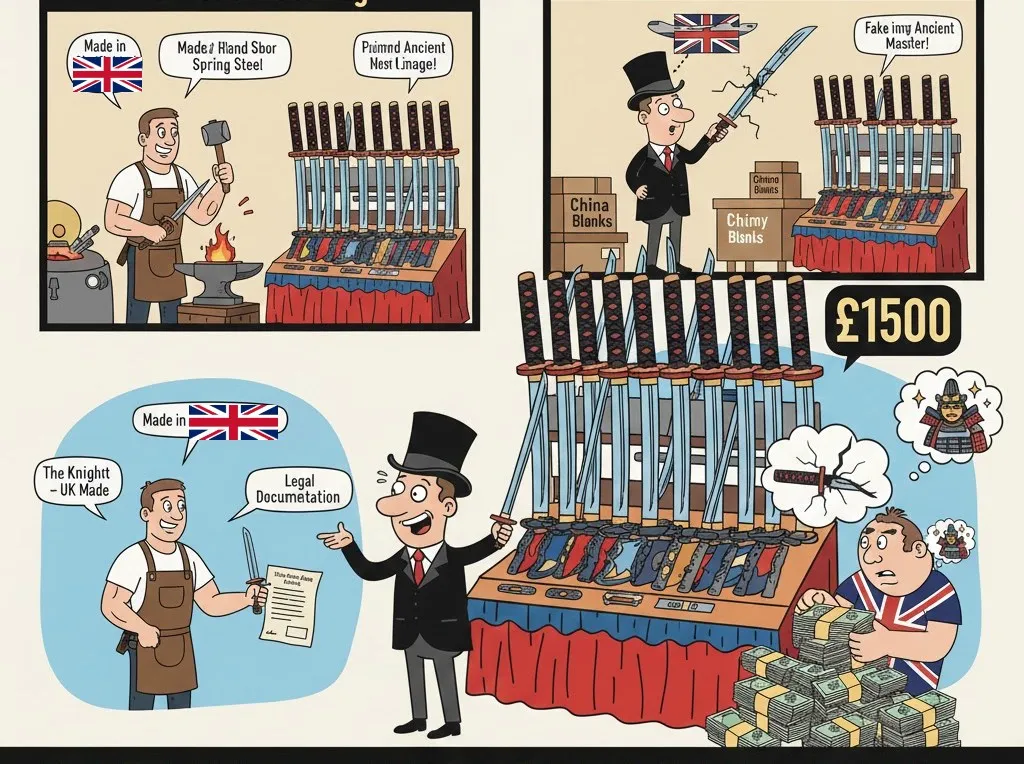
Here’s the irony – UK has legitimate sword makers producing better quality than most imports. Due to legal restrictions, many “Japanese” swords sold here are actually made in Birmingham or Sheffield, modified to comply with UK law.
Local blacksmiths and blade makers offer:
- Custom work tailored to UK legal requirements.
- Proper heat treatment and spring steel that won’t shatter.
- Realistic pricing without the “authentic Japanese” markup.
- Actual hand forging if that matters to you.
- Legal documentation and provenance.
The Knight Shop, Blades UK, and similar retailers stock UK-made pieces alongside imports. Their UK-produced swords often cost less than “authentic” imports while offering better steel and construction. A UK blacksmith charging £400 for a properly heat-treated blade beats a £1,500 Chinese fake claiming ancient lineage.
Museum Replicas and Kult of Athena ship to UK with proper documentation. They’re upfront about origins – their swords come from various workshops globally, priced accordingly. No pretense of secret Japanese masters, just functional replicas at honest prices.
The Convention Markup Scam
UK conventions and martial arts events become feeding grounds for sword sellers. Same sword that’s £200 online suddenly costs £600 at a convention booth. The seller spins tales about the smith, the steel, the ancient techniques. Reality? They bought it from the same Longquan factories everyone else uses.
Convention markups typically run:
- Basic Chinese production katana: £80 wholesale becomes £400-600.
- Pakistani fantasy swords: £20 wholesale becomes £150-200.
- Slightly better Chinese pieces: £150 wholesale becomes £800-1200.
- “Custom” pieces (same sword, different fittings): £200 wholesale becomes £1000+.
The emotional buying environment drives sales. Surrounded by enthusiasts, caught up in demonstrations, people drop serious money on wall hangers. That same clarity you’d have comparing prices online vanishes when someone in traditional dress is showing you “ancient sword techniques.”
Real Numbers vs Marketing Fiction
Authentic Japanese sword economics destroy seller claims instantly. Real Hand Forged Katana Involves:
- Tamahagane steel from specific Japanese sources – £500+ per blade worth.
- Three days of traditional smelting in single-use tatara furnaces.
- Months of forging, folding, and shaping by licensed smiths.
- Professional polishing by certified togishi – another month minimum.
- NBTHK certification process – months of evaluation.
A genuine Japanese swordsmith might produce 12-15 blades yearly. At UK convention claims of “hundreds of authentic pieces available,” the maths collapses. Japan’s entire traditional sword production couldn’t stock one major UK convention, let alone the dozens happening yearly.
Chinese factories? They’ll produce 500 identical “hand forged Katanas” this month alone. Made-in-China listings show minimum orders of 50-100 pieces. That’s not craftsmanship – it’s industrial manufacturing with marketing fiction attached.
The price tells the truth. Under £10,000? It’s not traditionally made in Japan. Under £1,000? It’s mass-produced. Under £500? It’s bottom-tier mass production. That’s reality, regardless of what sellers claim.
Next time someone tries selling you a “museum quality hand forged Katana” for £2,000, remember – UK martial artists are perfectly happy training with £50 foam swords because they understand the difference between functional tools and expensive wall decorations. The real skill isn’t in owning an expensive blade you can’t legally carry – it’s in knowing when you’re being sold a fantasy.
References
- UK Government guidance confirms curved blades over 50cm require specific exemptions for legal ownership
- Parliamentary Association for the Preservation and Promotion of Japanese Swords identifies widespread fake Japanese swords from China
- Border Force regularly seizes non-compliant sword imports at UK customs
- NBTHK certification represents the only recognized authentication for genuine Japanese swords


