

Now imagine a typical situation: a family is on motorhome hire websites, and they may pay £750 per week in June, and soon they change to hotel comparison websites, as it is insane expensive. The laptop is shut, the decision is deferred till tomorrow.
This occurs in thousands of homes in UK annually. When families look at that large price of hiring a motorhome, they automatically think that it is a luxury to buy by individuals with spare cash. However, this is where the majority of people go wrong when they plan a family holiday, they are comparing the price to rent a car to that of the hotel room which is not the real figure of what they would spend on a week away.
When you appropriately calculate the cost of what a motorhome vacation is versus a conventional road trip with hotels and dining out the figures speak a totally different language. The price of that £750 is suddenly becoming a bargain when you consider all that you are actually getting.
What a Traditional Road Trip Costs
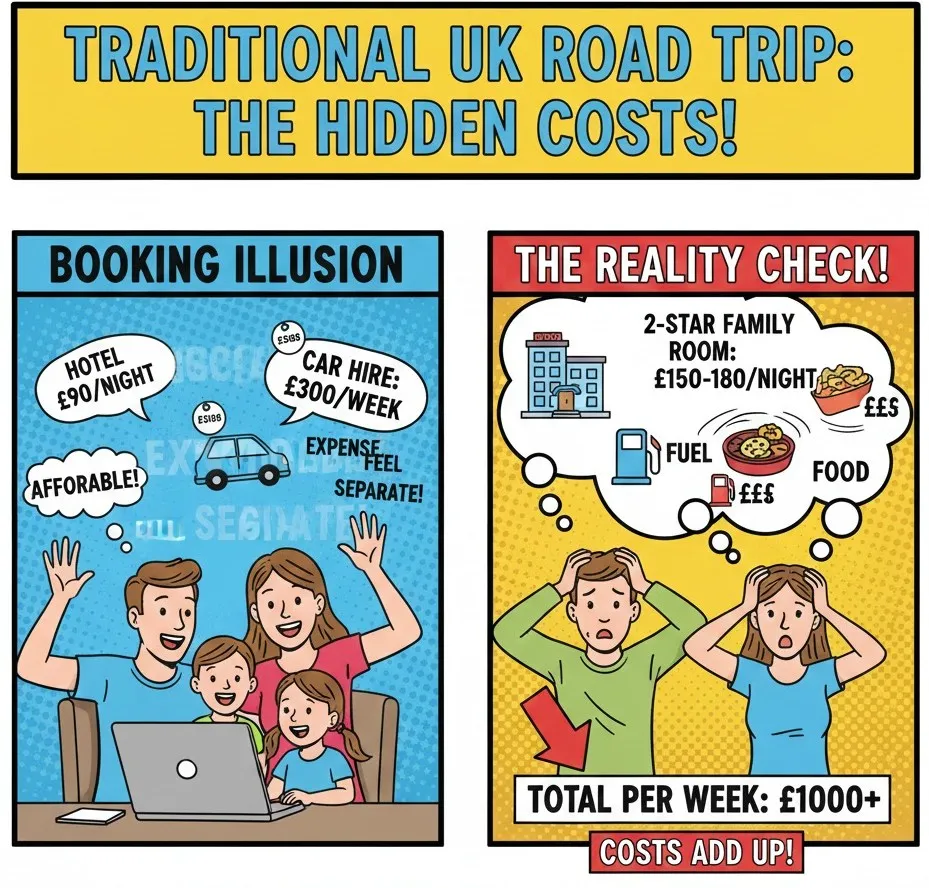
Majority of families do not sit down and count all the costs they incur before they find a holiday. You have discovered a good hotel rate, say 90 a night, and you think, that is quite reasonable, and so that you book it. Then you book a car in the week, another 300 or so. The expenses remain distinct in your minds since you are booking them at different periods when using different websites.
Four star hotels become expensive within seconds, and as you cross over the low-cost chains. Travel information shows that the average two-star hotel room in the UK with the capacity to accommodate two adults and two children in it is between 100 and 150 pounds every night. In the tourist resorts during the summer seasons you are at the upper section of that scale and can even appreciate to around £180 on a good family room.
Here’s what the week actually costs:
- Accommodation: 6 nights at £100-£150 per night = £600 to £900.
- Car hire: £250 to £350 for a family-sized vehicle. If either parent is under 25, add young driver fees of £175 to £245.
- Fuel: About 500 miles of touring at 135p per litre for petrol = £65 to £80.
- Food – this is where it stings:
- Breakfast: £10 per person at cafés or hotel add-on. That’s £40 per morning, £280 for the week.
- Lunch: £12-£15 per person at tourist spots. About £50 for the family, roughly £350 for seven days.
- Dinner: Mid-range family restaurants charge £25-£35 per adult and £15-£20 per child. Call it £100-£120 per evening, totalling £700-£840 for the week.
- Snacks and extras: Ice creams, coffee stops, emergency snacks between meals = £75.
Your food bill alone just hit £1,400 to £1,500. Combined with accommodation, car hire, and fuel, a traditional family road trip costs somewhere between £2,535 and £2,950 for the week. That number shocks most people when they actually see it written down, but it’s accurate based on current UK prices.
The Motorhome Holiday Breakdown
Right, so what does a motorhome holiday actually cost when you itemize everything properly? The numbers based on data from providers like Ariescape.co.uk and other UK motorhome hire companies show something interesting.
Motorhome hire – varies by season:
- Mid-season (April, May, September, October): £600-£750 per week for a four-berth.
- Peak summer (June-August): £750-£950.
- Off-season (November-March): £400-£550.
- Most companies include insurance, unlimited mileage, and kitchen equipment. Some charge extra for bedding packs.
Campsite fees:
- Average UK campsite with electric hookup: £30-£40 per night.
- Six nights = £180-£240.
- Budget option – Certificated Locations (small, basic sites): £20-£25 per night = £120-£150 for the week.
- Premium sites with pools and fancy facilities: £45-£50 per night if you want them.
Fuel:
- Most family motorhomes average 25-30 mpg on diesel (currently 143p per litre).
- For 500 miles of touring: £90-£120.
- Yes, more than a car, but you’re not paying that separate £300 car hire fee.
Food – the game changer:
- Weekly groceries for family of four: £120-£140.
- Eating out occasionally (2-3 times during week): £100-£150.
- Total food spend: £220-£290 instead of £1,500.
Extras:
- Gas canisters for cooking: £10-£15.
- Campsite Wi-Fi if needed: £15-£25.
- Tourist levies or environmental fees: £10-£20.
Total motorhome holiday cost: £1,265-£1,545
Your savings: £1,000-£1,400 compared to traditional road trip.
Suddenly that £750 hire fee doesn’t look so scary.
Beyond the Numbers
In addition to the direct financial advantages, the motorhome lends itself to convenient advantages that are converted into stress reduction and increased flexibility which in and of itself is worth something when you are struggling to keep two children entertained all week long.
Dining in your own kitchen means you are not at the whims of the restaurant opening time or making collapses because someone is hungry and all the places have 45 minute wait lines. You are able to prepare a breakfast whenever the children get up, prepare a decent picnic lunch that does not cost you £15 per sandwich in a National Trust cafe, and save whatever is left over of dinner breakfast to be a lunch tomorrow. This is particularly valuable to families whose dietary needs or allergies complicate the situation, as now they do not have to spend time dealing with restaurant employees, discussing the ingredients.
Whether or not there is accommodation flexibility is more than a point. Scotland has permitted wild camping, meaning that you are free to park anywhere breathtaking and it is not illegal. There are plenty of pub stopovers in England and Wales that you can spend the night in the car park at between a pound fifteen and twenty five to eat dinner in the pub. When the weather becomes horrible at the destination you would go to then you simply drive to another place. Attempt it with the booking of a hotel.
Hotels are accompanied with unseen expenses that are swept away with a motorhome. You are not spending £8 a head on hotel breakfast in the morning. No £15 a day parking fee at your hotel. You can escape the trap of having to go and buy snacks and finding yourself buying crisps at the hotel vending machine and paying £4. Children can take the nap in the van between the activities rather than you spending the money of early checking-in to the hotel just because one is tired and grumpy.
Packing efficiency is time and hassle saving. Once you unpack at the beginning of the holiday, and all things live in one place during the entire week. No leaving one hotel, three-hour drive to another, checking in, and then finding out that you leave your friend or boyfriend with his favourite teddy in the last hotel.
A Real Life Idea: Lake District Week.
The following is how an actual family trip would have cost to give you an idea of the figures on the ground. The small family consisting of two adults, an eight-year-old, and a five-year-old spent the October half-term in the Lake District in a hired motorhome.
Their breakdown:
- Four-berth motorhome hire (7 days, off-season): £580.
- Campsites: Mixed approach saved money. Three nights at a Lake District site with showers and play area (£35/night = £105). Two nights wild camping near Ullswater (free). Two nights at a pub stopover in Grasmere (£20/night = £40).
- Fuel: About 400 miles around the Lakes and from Manchester = £95.
- Groceries: Tesco shop in Keswick = £135.
- Eating out: Twice during the week. Once at a pub (£85), once fish and chips by the lake (£45).
- Extras: Gas canister and campsite Wi-Fi = £25.
Total spend: £1,110
They’d budgeted £1,300 based on initial estimates, so they came in under budget and stayed an extra night at a campsite near Windermere because the kids were having a brilliant time. Their friends who did a similar Lakes holiday in hotels the previous year had spent close to £2,400.
The Trade-Offs Worth Knowing About

Motorhome holidays are not to all, and it is better to be upfront on what you are getting yourself into. You are spending a week in a cramped place.
There are not enough restrooms, the beds are not king-sized, and there is not very much space for storage. However, most kids think the entire experience is part of the adventure and not a step down.
There are so many facilities at the camping sites. Some even have showers and laundry facilities! Some people have facilities that are not the best. Check the most recent reviews before you book. The camping and caravanning club along with the caravan and motorhome club have very detailed guides for you.
Weather dependence is real! Rain for all three days is no fun. But at least with a camper you have the option to drive to a place that isn’t pouring! The UK is known for their rainy weather so it’s always nice to have a motorhome to drive to a better spot!
It is harder to adapt to reversing with larger cars when pitching, but it’s just a matter of time as its super easy once you get used to it. Most of the family motorhomes are under 3.5 tonnes so you can drive them with a regular uk driving license. The first hour is just so you can get used to it.
The prices do increase quite a lot during the peak season. The off season salary of 580 pounds shifts to 850 – 950 in July and August. The savings overall are still worth it, even if the savings are less. Booking six months in advance helps get the best prices.
Doing It even cheaper without getting funless.
Families that take out motorhome trips frequently have devised methods of stretching the savings to the extreme. Making reservations early (six months or more) is generally more cost effective (saving £100-200) on the hiring expense since the companies will give out early bird rates. Shoulder season (end of May or September) is better weather and not high prices.
By becoming a member of one of these club schemes (cost of membership varies, but is between £25 and £30 a year in Camping and Caravanning Club or Caravan and Motorhome Club) you can enjoy cheaper Certificated Locations and reduced fee at club sites. On a couple of trips per year, that membership is justified.
It would be reasonable to pack the basics at home. Coffee, tea bags, cooking oil, salt, pepper, and commonly used spices do not occupy much of the room but do not need to purchase the full size of the same at exorbitant prices at the campsite shops. Bring your own washing up liquid and bin bags as well.
Applications such as Park4Night and SearchForSites indicate free and affordable overnight locations in the UK. Others are good hidden gems – off-the-road sections of a farm, pub car parks or layby views where one can park up overnight.


